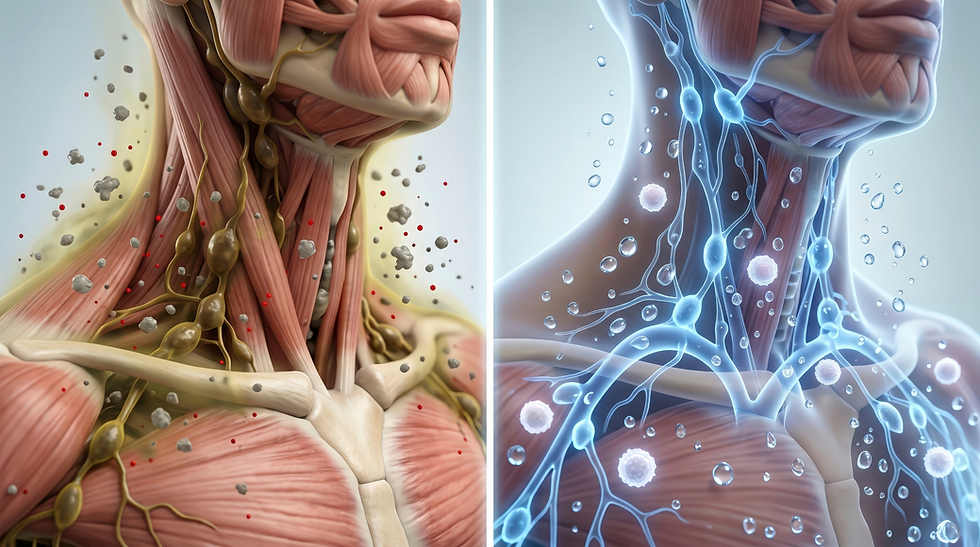
How Does Lymph Move? The Science Behind Lymphatic Flow

Unlike blood, lymph doesn't have a heart to pump it. Instead, your body relies on movement to keep lymph flowing.
Most people are surprised to learn that the lymphatic system has no central pump.
Unlike the circulatory system, where the heart continuously pushes blood throughout the body, the lymphatic system depends on a combination of natural mechanical forces to move lymph from tissues back into circulation.
This is one of the reasons movement plays such an important role in recovery.
Every step you take, every deep breath you breathe, and every muscle contraction you make helps support the body's natural lymphatic function.
Within the Fundamentals of Recovery, this is why Drain comes first.
Before the body can efficiently repair, adapt, and perform, it first needs effective movement of excess fluid and cellular waste.
Why Doesn't the Lymphatic System Have a Pump?
The circulatory and lymphatic systems work together, but they move fluid in very different ways.
The circulatory system uses the heart to generate pressure, pushing blood through arteries, capillaries, and veins.
The lymphatic system doesn't require a heart because it's collecting fluid that's already left the bloodstream and entered surrounding tissues.
Instead of relying on one powerful pump, lymph moves through a network of lymphatic vessels with the help of:
Skeletal muscle contractions
Deep diaphragmatic breathing
Normal body movement
Healthy tissue mobility
Small rhythmic contractions within lymphatic vessel walls
One-way valves that help direct lymph forward
These mechanisms work together continuously throughout the day.
The Body's Natural Pumps
The body already has several built-in systems that help support lymph movement.
Rather than relying on one structure, lymph moves because the body itself is designed to move.
Muscle Contractions
Every time muscles contract, they gently compress surrounding tissues and lymphatic vessels.
This creates small mechanical forces that help move lymph through the body's network of vessels.
You don't have to perform intense workouts to benefit.
Walking, climbing stairs, standing up, gardening, carrying groceries, and everyday movement all contribute.
Deep Breathing
Breathing does much more than bring oxygen into the lungs.
As the diaphragm moves during deep breathing, pressure naturally changes within the chest and abdomen.
These pressure changes help support the movement of lymph toward larger lymphatic vessels and eventually back into the bloodstream.
It's one reason slow, controlled breathing can support multiple systems involved in recovery.
Daily Movement
Lymph responds to movement throughout the day.
Examples include:
Walking
Standing
Changing positions
Reaching
Twisting
Gentle stretching
Household activities
These movements may seem small, but together they create thousands of opportunities to support the body's natural fluid movement.
Recovery isn't built during one perfect workout.
It's built through consistent movement over time.
Healthy Tissue Mobility
The body is made to move as one connected system.
Healthy joint motion, flexible connective tissues, and normal tissue mobility all allow surrounding muscles and structures to move efficiently.
When movement becomes more restricted—whether from prolonged sitting, injury, or reduced activity—the mechanical forces that help support lymph movement may also be reduced.
What Happens During Long Periods of Sitting?
Imagine walking through an airport with moving walkways.
When the walkways are operating, getting to your gate takes less effort.
If the walkways stop, you can still reach your destination, but it requires more work and progress feels slower.
Something similar happens during prolonged sitting.
Lymph doesn't suddenly stop moving, but many of the natural mechanical forces that help support it become less active.
Hours spent sitting reduce muscle contractions, joint movement, and changes in body position that normally encourage fluid movement.
This is one reason regular movement breaks can be beneficial—not because they "flush toxins," but because they restore the natural movement the body was designed for.
Does Exercise Matter?
Yes—but perhaps not in the way many people think.
The lymphatic system doesn't require one specific type of exercise.
Many forms of physical activity help support the body's natural lymphatic function, including:
Walking
Resistance training
Cycling
Swimming
Yoga
Mobility exercises
Recreational sports
The best exercise is often the one you'll perform consistently.
Regular movement creates repeated opportunities for the body's natural mechanical pumps to do their job.
Can Massage Help Move Lymph?
Certain manual therapies, including manual lymphatic drainage (MLD), are used in clinical settings for specific medical conditions and may also be incorporated into wellness or recovery programs for some individuals.
These techniques are designed to support the body's natural lymphatic processes—not replace them.
It's important to remember that the body's primary method of moving lymph is its own physiology.
Daily movement, breathing, and muscle activity remain the foundation of healthy lymphatic function.
Why Movement Is the First Recovery Tool
Movement influences far more than the lymphatic system.
It also supports:
Circulation
Joint mobility
Connective tissue health
Muscle function
Nervous system regulation
Overall physical resilience
That's why movement is often one of the first recommendations for supporting recovery.
You don't need complicated routines to begin.
Small, consistent actions performed throughout the day often provide more benefit than occasional bursts of activity followed by prolonged inactivity.
The body responds to consistency.
Drain Begins With Movement
Within the Fundamentals of Recovery, Drain asks a simple question:
Can waste get out?
One of the most effective ways to support that process is through movement.
Every step, every breath, every stretch, and every muscle contraction contributes to the remarkable systems already built into your body.
Recovery isn't about forcing the body to work harder.
It's about creating the conditions that allow its natural systems to work efficiently.
When Drain is supported through consistent movement, the body is better prepared for the next Fundamental of Recovery:
Flow—the movement of oxygen, nutrients, hormones, and other resources that help tissues repair, adapt, and perform.
Recovery Was Designed to Move
The human body wasn't designed for stillness.
It was designed to breathe, walk, reach, bend, lift, and adapt to the demands of everyday life.
Those movements don't just strengthen muscles or improve fitness—they also help support the physiological systems working behind the scenes every moment of every day.
Understanding how lymph moves changes the way we think about recovery.
Instead of searching for a single solution, we begin to appreciate that recovery is built through thousands of small moments of movement repeated consistently over time.
Sometimes, the most powerful recovery tool isn't something you add.
It's simply choosing to move.
Frequently Asked Questions About Lymphatic Flow
How does lymph move through the body?
Unlike blood, lymph is not pumped by the heart. Instead, lymph moves through the lymphatic system with the help of muscle contractions, deep diaphragmatic breathing, normal body movement, healthy tissue mobility, small contractions within lymphatic vessel walls, and one-way valves that keep lymph moving in the proper direction.
Does the lymphatic system have a pump?
No. The lymphatic system does not have a central pump like the heart. Instead, it relies on natural body movement and the rhythmic contraction of lymphatic vessels to help transport lymph back into the bloodstream.
Does walking help lymphatic flow?
Walking supports the body's natural lymphatic function because each step activates muscles and creates gentle mechanical forces that help move lymph through lymphatic vessels. Regular walking is one of many forms of movement that support healthy lymphatic flow.
Can deep breathing help move lymph?
Yes. Deep diaphragmatic breathing changes pressure within the chest and abdomen, helping support the natural movement of lymph. Breathing also works together with muscle contractions and body movement to assist normal lymphatic function.
Does sitting for long periods affect lymphatic flow?
Prolonged sitting reduces many of the natural movements that help support lymph flow, including muscle contractions and changes in body position. While lymph continues to move, regular movement breaks can help restore the mechanical forces that support the body's natural lymphatic function.
Does exercise improve lymphatic flow?
Regular physical activity supports healthy lymphatic function by increasing movement throughout the body. Walking, resistance training, cycling, swimming, yoga, and other forms of exercise all create muscle contractions that help support the natural movement of lymph.
Can massage move lymph?
Certain manual therapies, such as manual lymphatic drainage (MLD), are used in clinical settings for specific medical conditions and may also be incorporated into wellness or recovery programs for some individuals. These techniques are designed to support the body's natural lymphatic processes rather than replace them.
Why is movement important for recovery?
Movement supports multiple systems involved in recovery, including lymphatic flow, circulation, joint mobility, muscle function, connective tissue health, and nervous system regulation. Within the Fundamentals of Recovery, movement helps support Drain, the first pillar of recovery, by promoting the body's natural movement of excess fluid and cellular waste.