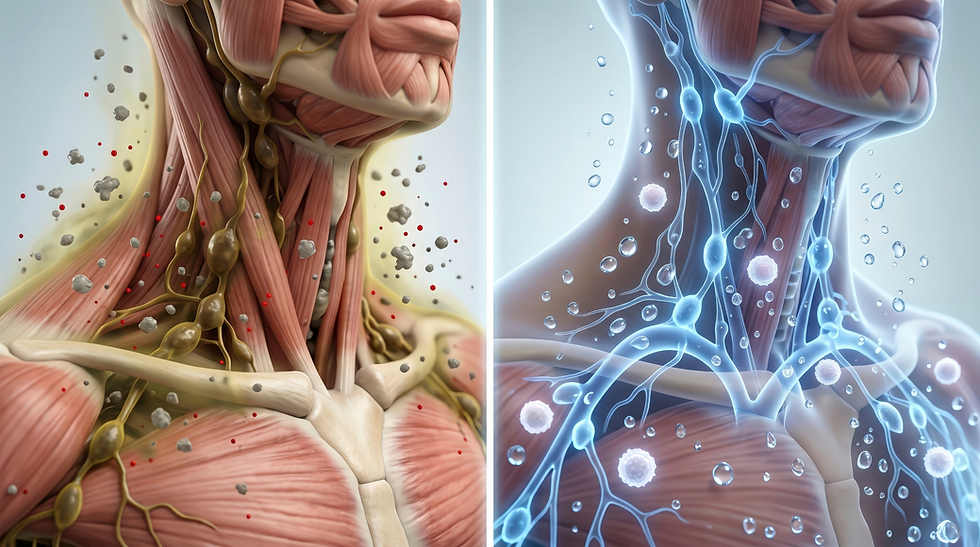
What Is Lymph? Understanding the Fluid That Supports Recovery

The lymphatic system often gets the attention—but lymph is what actually moves through it.
This clear, colorless fluid plays an essential role in maintaining fluid balance, supporting immune function, transporting dietary fats, and carrying cellular waste away from tissues. Understanding what lymph is and how it works provides a better understanding of why Drain is the first Fundamental of Recovery.
What Is Lymph?
Lymph is a clear fluid that circulates through the lymphatic system. It begins as interstitial fluid—the fluid that naturally surrounds your body's cells.
As blood flows through tiny blood vessels called capillaries, some of the plasma leaves the bloodstream to deliver oxygen and nutrients to nearby tissues. Most of this fluid returns directly to the bloodstream, but some remains in the spaces between cells.
That remaining fluid enters tiny lymphatic capillaries, where it becomes lymph.
From there, lymph travels through an extensive network of lymphatic vessels before eventually returning to the bloodstream.
Where Does Lymph Come From?
Lymph is part of the body's continuous fluid recycling process.
The pathway looks like this:
Blood plasma → Interstitial fluid → Lymphatic capillaries → Lymphatic vessels → Lymph nodes → Larger lymphatic vessels → Bloodstream
This cycle occurs continuously throughout the day, helping maintain fluid balance while transporting important materials through the body.
Rather than creating an entirely separate fluid, the body is constantly collecting, filtering, and returning fluid where it's needed.
What Does Lymph Contain?
Lymph is much more than water.
Depending on where it is in the body, lymph may contain:
Water
Proteins
White blood cells (especially lymphocytes)
Cellular waste products
Bacteria, viruses, or other foreign particles that the immune system removes
Hormones and signaling molecules
Dietary fats absorbed from the small intestine
Minerals and electrolytes
The exact composition changes as lymph travels through different tissues and organs.
What Does Lymph Do?
Lymph performs several important jobs that help keep the body functioning normally.
Maintains Fluid Balance
Every day, fluid naturally moves from the bloodstream into surrounding tissues.
While much of it returns directly to the blood, some is collected by the lymphatic system.
Without this process, excess fluid would continue accumulating within tissues.
Lymph helps return this fluid to the bloodstream, contributing to the body's normal fluid balance.
Supports the Immune System
As lymph travels through lymphatic vessels, it passes through lymph nodes—small structures that contain immune cells.
These immune cells help identify and respond to bacteria, viruses, damaged cells, and other substances the body recognizes as foreign.
Rather than simply acting as "filters," lymph nodes serve as important meeting places where immune cells communicate and coordinate immune responses.
Transports Dietary Fats
The lymphatic system also helps absorb certain fats and fat-soluble vitamins from the digestive tract.
Specialized lymphatic vessels in the small intestine collect these nutrients and transport them into circulation.
This is one of the major functions that makes the lymphatic system unique from the circulatory system.
Carries Cellular Waste
Cells constantly produce byproducts as part of normal metabolism.
Lymph helps transport excess proteins, cellular debris, and other materials away from tissues so they can continue through the body's normal recycling and elimination processes.
This ongoing movement is one reason Drain is the first Fundamental of Recovery—it supports the body's ability to continuously manage what cells no longer need.
Is Lymph the Same as Blood?
Although they're closely connected, blood and lymph serve different purposes.
Blood | Lymph |
Pumped by the heart | Moves through the lymphatic system without a central pump |
Carries oxygen and nutrients | Returns excess fluid and transports immune cells, fats, and cellular waste |
Contains large numbers of red blood cells | Contains primarily white blood cells and very few red blood cells |
Circulates continuously through blood vessels | Travels one direction through lymphatic vessels before returning to the bloodstream |
Together, these two systems work continuously to maintain balance throughout the body.
What Happens to Lymph?
Lymph doesn't stay within the lymphatic system forever.
As it travels through larger lymphatic vessels, it eventually empties back into large veins near the base of the neck, where it rejoins the bloodstream.
From there, the fluid once again becomes part of normal circulation.
This continuous cycle of movement helps maintain fluid balance throughout the body every day.
Why Lymph Matters for Recovery
Recovery isn't simply about repairing tissue—it's also about maintaining the systems that allow the body to function efficiently.
Lymph helps move excess fluid, supports immune activity, transports dietary fats, and carries cellular byproducts as part of the body's normal physiology.
Within the Fundamentals of Recovery, these processes fall under Drain. Drain isn't about forcing the body to "detox." It's about supporting the systems that naturally move and recycle fluid every day.
When those systems are functioning well, they help create an environment where the rest of recovery can occur more effectively.
Understanding Recovery Beyond Lymph
Lymph is only one part of the body's larger recovery system, but it's an important one.
Every day, your body collects excess fluid, transports immune cells, carries nutrients, and moves cellular waste—all through a fluid that most people never think about.
Understanding what lymph is helps explain why recovery isn't only about what you add to the body. It's also about supporting the natural systems already working to keep tissues healthy and balanced.
That's why Drain is the first Fundamental of Recovery. It recognizes that before the body can perform at its best, it first needs to keep its internal transportation systems moving as they're designed to.
Frequently Asked Questions About Lymph
What is lymph?
Lymph is a clear, colorless fluid that circulates through the lymphatic system. It begins as interstitial fluid—the fluid that surrounds your body's cells—and helps maintain fluid balance, transport immune cells, absorb certain dietary fats, and carry cellular waste back toward the bloodstream.
Where does lymph come from?
Lymph begins as blood plasma that leaves tiny blood vessels to deliver oxygen and nutrients to surrounding tissues. While much of this fluid returns directly to the bloodstream, some enters lymphatic capillaries, where it becomes lymph and begins its journey through the lymphatic system.
What does lymph do?
Lymph serves several important functions. It helps return excess fluid to the bloodstream, transports white blood cells, carries certain fats absorbed from the digestive system, and moves cellular waste and other materials through the lymphatic system as part of the body's normal physiology.
Is lymph the same as blood?
No. Blood and lymph are different fluids with different roles. Blood carries oxygen and nutrients throughout the body and is pumped by the heart. Lymph travels through the lymphatic system without a central pump and helps maintain fluid balance, support immune function, and transport certain substances back into circulation.
What is lymph made of?
Lymph is primarily made of water, but it also contains proteins, white blood cells, fats absorbed from the digestive tract, minerals, hormones, cellular waste products, and other substances collected from body tissues. Its composition can vary depending on where it is in the body.
Where does lymph go after it leaves the tissues?
Lymph travels through lymphatic vessels and passes through lymph nodes before eventually returning to the bloodstream through large veins near the base of the neck. This continuous cycle helps maintain the body's normal fluid balance.
Can lymph stop moving?
Under normal conditions, lymph continues to move throughout the body. Because the lymphatic system does not have a heart to pump it, lymph relies on muscle contractions, breathing, body movement, and the natural contraction of lymphatic vessels to support its flow.
Why is lymph important for recovery?
Lymph helps maintain fluid balance, supports immune function, transports dietary fats, and carries cellular waste as part of the body's normal physiological processes. Within the Fundamentals of Recovery, these functions support Drain, the first pillar of recovery, by helping the body continuously move and recycle fluid as intended.