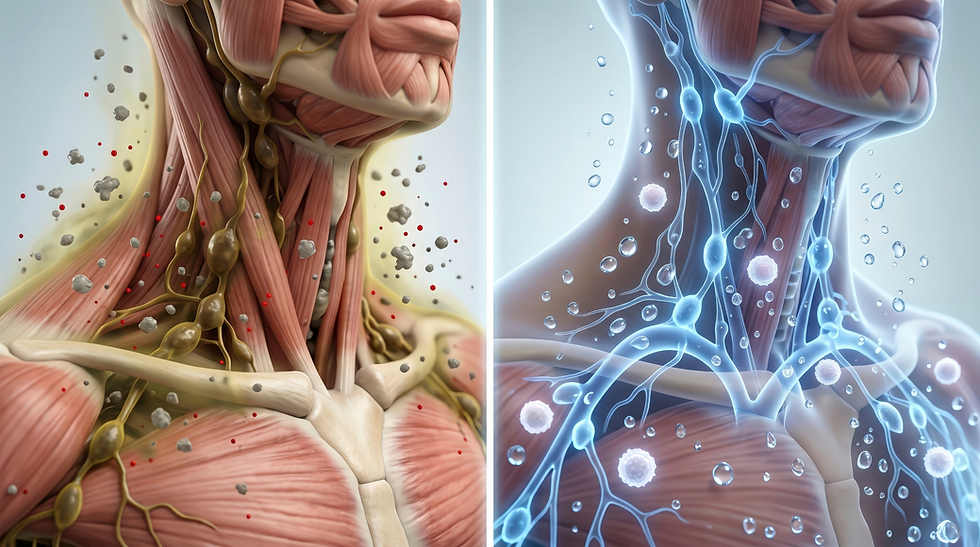
What Causes Swelling? Understanding Why the Body Holds Fluid

Swelling isn't a condition—it's a response.
When fluid begins collecting in tissues, it's often a sign that the body is reacting to something. Understanding the possible causes of swelling is the first step toward understanding what your body may be telling you.
Swelling happens to nearly everyone at some point.
You might notice swollen ankles after a long flight, puffy fingers on a hot day, or temporary swelling after an injury or workout. Other types of swelling can last longer and may signal an underlying medical condition that should be evaluated.
Although swelling is common, it's often misunderstood. Many people immediately assume their lymphatic system is "clogged" or that they need to "detox." In reality, swelling can happen for many different reasons.
Understanding why swelling occurs helps you ask a better question—not just how to reduce it, but what your body may be responding to.
What Is Swelling?
Swelling, also called edema, occurs when excess fluid accumulates in the spaces between cells.
A small amount of fluid naturally moves between the bloodstream and body tissues throughout the day. Under normal conditions, this fluid remains in balance as blood vessels, the lymphatic system, and surrounding tissues work together.
When that balance changes, fluid can temporarily collect within tissues, making an area appear larger, tighter, or puffier than usual.
Swelling itself isn't a disease. It's a sign that something has changed in the body's normal fluid balance.
Common Causes of Swelling
Swelling has many possible causes, ranging from normal physiological responses to medical conditions.
Injury
After an injury, the body increases blood flow and brings immune cells to the affected area to begin healing. This response often causes temporary swelling, warmth, and tenderness.
In many cases, swelling is part of the normal healing process.
Inflammation
Inflammation changes the way fluid moves between blood vessels and surrounding tissues.
Whether inflammation occurs because of an injury, infection, autoimmune condition, or another cause, fluid may temporarily accumulate as part of the body's response.
Prolonged Sitting or Standing
Movement helps support normal circulation and lymphatic flow.
After sitting on an airplane for several hours or standing all day, gravity and reduced muscle activity may contribute to temporary swelling, especially in the feet and ankles.
Exercise
Intense physical activity creates microscopic stress within muscles.
Temporary swelling after exercise is a normal part of tissue repair and adaptation.
Heat
Warm temperatures cause blood vessels near the skin to widen.
As more fluid moves into surrounding tissues, some people notice mild swelling during hot weather.
Hormonal Changes
Hormonal fluctuations can influence how the body regulates fluid.
Some people experience temporary swelling during different phases of the menstrual cycle or at other times when hormone levels change.
Certain Medications
Some medications may contribute to swelling as a side effect.
If swelling begins after starting a new medication, it's important to discuss it with the prescribing healthcare professional rather than stopping the medication on your own.
Medical Conditions
Persistent or unexplained swelling can sometimes be associated with underlying medical conditions affecting the heart, kidneys, liver, veins, or lymphatic system.
Swelling that develops suddenly, becomes severe, affects only one limb, or occurs with symptoms such as chest pain or shortness of breath should be evaluated promptly by a healthcare professional.
Does Swelling Mean the Lymphatic System Isn't Working?
Not necessarily.
The lymphatic system plays an important role in maintaining fluid balance, but it is only one part of a much larger system.
Blood vessels, circulation, inflammation, hormones, gravity, tissue health, and underlying medical conditions can all influence whether fluid accumulates within tissues.
That's why swelling should be viewed as a signal, not a diagnosis.
Rather than assuming every case of swelling has the same cause, it's more helpful to understand that the body can respond in different ways depending on what's happening beneath the surface.
Supporting Healthy Fluid Balance
Although the cause of swelling varies, several everyday habits help support the body's normal fluid movement:
Regular movement throughout the day
Walking and other physical activity
Staying adequately hydrated
Getting sufficient sleep
Following medical guidance for underlying health conditions
Avoiding prolonged periods of sitting or standing when possible
These habits support overall health, but they are not a substitute for medical evaluation when swelling is persistent, severe, or accompanied by concerning symptoms.
Drain Within the Fundamentals of Recovery
Within the Fundamentals of Recovery, swelling is viewed as information rather than simply something to eliminate.
The question isn't just:
"How do I get rid of the swelling?"
A more useful question is:
"Why is my body holding extra fluid?"
Answering that question begins with understanding the systems responsible for maintaining fluid balance—including the lymphatic system, circulation, and the body's natural healing responses.
That's why Drain is the first Fundamental of Recovery. Before the body can perform, adapt, or heal efficiently, it needs to maintain healthy movement of fluid and cellular waste.
Understanding Recovery Beyond Symptoms
Swelling isn't the problem—it is often the body's response to a problem.
Rather than treating every symptom as something to suppress, recovery begins by understanding what those symptoms may be communicating.
When you recognize swelling as a signal instead of simply an inconvenience, you can begin looking beyond the symptom toward the physiological processes that influence recovery.
Frequently Asked Questions About Swelling
What causes swelling?
Swelling occurs when excess fluid collects in the tissues. Common causes include injury, inflammation, prolonged sitting or standing, exercise, heat, hormonal changes, certain medications, and some medical conditions. The underlying cause determines why fluid is accumulating.
Is swelling the same as edema?
Edema is the medical term for swelling caused by excess fluid in the body's tissues. While "swelling" is the everyday term, edema specifically describes fluid accumulation. Depending on the cause, edema may be temporary or persistent.
Does swelling always mean something is wrong?
Not always. Temporary swelling can be a normal response to situations such as exercise, an injury, or standing for long periods. However, swelling that is severe, persistent, unexplained, or accompanied by other symptoms should be evaluated by a healthcare professional.
Does swelling mean my lymphatic system isn't working?
Not necessarily. The lymphatic system helps maintain fluid balance, but swelling can have many causes. Circulation, inflammation, hormones, gravity, medications, and certain medical conditions can all contribute to fluid accumulating in tissues.
Why do my feet and ankles swell after standing or sitting all day?
When you remain in one position for an extended period, gravity and reduced muscle activity can make it easier for fluid to collect in the lower legs and feet. Changing positions, walking, and regular movement help support the body's normal fluid movement.
Can exercise cause swelling?
Yes. Temporary swelling after exercise is often a normal part of the body's response to physical activity. Exercise creates microscopic stress within muscles, and the body's healing process may temporarily increase fluid movement into the area as tissues recover.
When should swelling be evaluated by a healthcare professional?
You should seek medical evaluation if swelling develops suddenly, affects only one limb, becomes severe, continues to worsen, or occurs with symptoms such as pain, redness, chest pain, or shortness of breath. Persistent or unexplained swelling should also be discussed with a healthcare professional.
Why is swelling important in the Fundamentals of Recovery?
Within the Fundamentals of Recovery, swelling is viewed as a signal rather than simply a symptom to eliminate. Instead of asking how to make swelling disappear, the goal is to understand what changes in the body's physiology may be contributing to fluid accumulation. Identifying the underlying cause helps guide more appropriate recovery strategies.